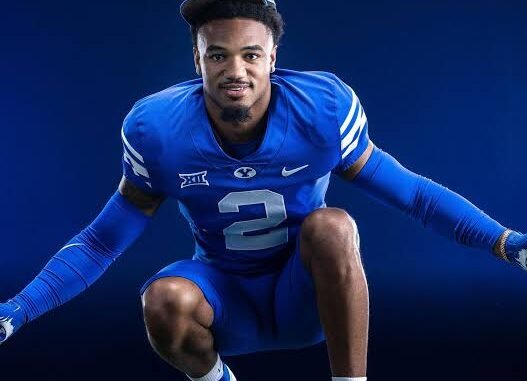
**BYU Football’s Tayvion Beasley Enters Transfer Portal: What’s Next for the Star Defensive Back?**
In a surprising development for BYU football, standout defensive back Tayvion Beasley has officially entered the NCAA transfer portal, signaling a potential shift in the Cougars’ defensive plans and raising questions about Beasley’s future in college football. As the transfer market continues to evolve into a strategic tool for players and programs alike, Beasley’s decision to explore new opportunities marks a significant moment for BYU’s defense and for the talented athlete himself.
### A Rising Star in BYU’s Secondary
Tayvion Beasley, a talented safety, arrived at BYU with high expectations. Known for his athleticism, versatility, and playmaking ability, Beasley quickly established himself as a key member of the Cougars’ secondary. His instincts, ball skills, and willingness to come downhill and make tackles earned him recognition among coaches and fans alike.
During his tenure at BYU, Beasley displayed a knack for creating turnovers and making game-changing plays. His interceptions, pass breakups, and ability to cover multiple positions made him a versatile asset in the defensive backfield. His leadership qualities and work ethic further endeared him to teammates and coaching staff, positioning him as a potential future leader of the defense.
Throughout his time at BYU, Beasley’s performances garnered attention from opponents and analysts, and he was viewed as a rising star in the Mountain West Conference. His potential to become an all-conference performer and perhaps even catch the attention of NFL scouts was evident, making his decision to enter the transfer portal all the more noteworthy.
### The Transfer Portal Announcement
The news of Beasley’s entry into the NCAA transfer portal broke earlier this week, sending shockwaves through the BYU community. While individual reasons for transferring can vary, the move generally indicates a desire for more playing time, a better fit with a different coaching staff, or personal considerations.
In a statement shared through social media, Beasley expressed gratitude for his time at BYU and appreciation for the coaching staff, teammates, and fans who supported him. He emphasized that his decision was driven by a desire to find the best environment to maximize his potential and continue his football journey.
Sources close to the program suggest that Beasley’s departure was a carefully considered decision, with multiple factors influencing his choice. Whether it’s seeking a program with a different defensive scheme, a more aggressive style of play, or simply a new environment to grow both on and off the field, Beasley’s transfer reflects his pursuit of the optimal setting for his athletic and personal development.
### What Does This Mean for BYU?
Losing a player of Beasley’s caliber is a significant blow to BYU’s secondary. His ability to play multiple positions in the defensive backfield, combined with his playmaking skills, provided the Cougars with valuable flexibility and talent.
Defensive coordinator Jay Hill and the BYU coaching staff now face the challenge of adjusting their secondary rotation and game plans without Beasley’s impact. This departure also opens the door for other players to step up and fill the void, whether through increased roles for returning safeties or through the addition of new recruits or transfers.
Furthermore, Beasley’s exit may influence BYU’s recruiting strategy moving forward. The coaching staff could prioritize bringing in a versatile, athletic defensive back who can contribute immediately and help maintain the team’s defensive intensity.
### Where Might Beasley Transfer?
Speculation about Beasley’s next destination is already underway. As a talented defensive back with a proven track record, he will likely attract interest from programs seeking to bolster their secondary.
Potential transfer destinations may include schools with strong defensive traditions or schemes that align with Beasley’s skill set. Power conference programs, especially those in the Pac-12, SEC, or Big 12, could be interested, as well as other Group of Five schools looking to add a proven playmaker.
Some plausible options include programs that emphasize aggressive, ball-hawking defenses, such as USC, Oregon, or Texas A&M. Additionally, schools in the Mountain West or other Group of Five conferences could be attractive options if they offer a clear path to significant playing time and a system that suits Beasley’s talents.
Ultimately, Beasley’s decision will hinge on several factors, including the coaching staff, scheme fit, academic considerations, and personal preferences. His experience and skill set make him a highly sought-after transfer, and he’ll likely have multiple options to consider.
### The Broader Context: The Changing Landscape of College Football Transfers
Beasley’s transfer is emblematic of a broader trend in college football, where the transfer portal has become a primary tool for players seeking new opportunities. Over the past few seasons, the volume of transfers has surged, driven by the NCAA’s transfer rules, NIL opportunities, and players’ desire for immediate playing time or a better fit.
For Beasley, transferring could mean the chance to showcase his talents on a bigger stage or in a different defensive scheme that better aligns with his strengths. For programs, acquiring transfers like Beasley offers an opportunity to add experienced, talented players who can contribute immediately, often without the need for a lengthy development period.
However, this trend also raises questions about program stability, team chemistry, and long-term player development. Yet, for athletes like Beasley, the transfer portal provides a critical pathway to maximize their college football careers and potentially open doors to professional opportunities.
### What’s Next for Beasley?
As Beasley explores his transfer options, the college football world will be watching closely. His decision could significantly impact his future, whether he lands at a Power Five program, remains within the Group of Five, or even considers opportunities outside the NCAA.
Regardless of where he chooses to continue his career, Beasley’s talent and work ethic suggest he will be successful wherever he lands. His time at BYU has laid a solid foundation, and his experience in Provo has prepared him for the challenges ahead.
For BYU, the focus now shifts to maintaining a competitive roster and developing younger players to fill the void. The coaching staff’s ability to adapt and recruit effectively will be crucial in ensuring the team remains competitive in the Mountain West and beyond.
### Final Thoughts
Tayvion Beasley’s decision to enter the transfer portal marks a pivotal moment in his football journey. As a talented defensive back with a bright future, he now has the opportunity to find a program that best suits his ambitions and skills. While his departure is a loss for BYU’s defense, it also underscores the evolving nature of college football, where transfers are an integral part of roster management and player development.
Ultimately, Beasley’s next steps will define his career trajectory, and fans across the country will be eager to see where he lands and how he continues to make an impact on the field. His story exemplifies the new era of college football—one where talent, opportunity, and adaptability shape the future of the sport.
Leave a Reply